Backup power
The problem
For some equipment, a few minutes without power is the whole cost: a vaccine fridge, a server, a production line mid-batch. Generators take time to start and need someone to start them.
How we solve it
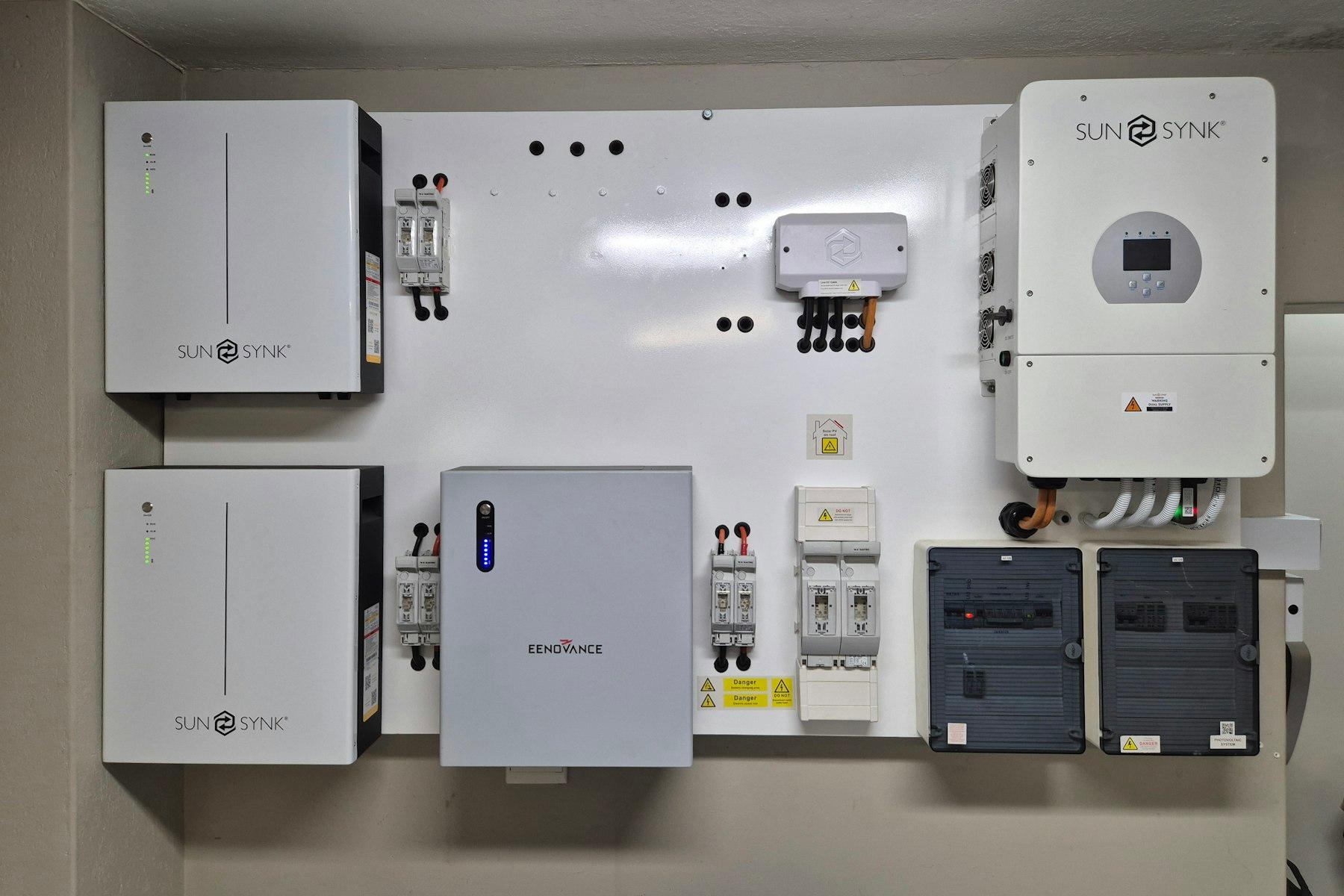
We identify the loads that must never stop and build around them: a battery sized for the outages you actually experience, automatic switching measured in milliseconds, and solar to recharge it so backup doesn't depend on fuel.
What's included
- Critical-load audit and outage history review
- Lithium iron phosphate storage with automatic switching
- Solar recharging, with generator integration if needed
- Remote alerts when the system switches or runs low
- Maintenance plan with battery health reports
What it changes for you
No gap at all
Protected circuits switch over faster than equipment can notice.
Backup that recharges itself
Solar refills the battery during the day, so readiness doesn't depend on a fuel delivery.
You'll know before it matters
Alerts reach your phone when the system switches or the battery runs low.
Who it's for
- Clinics and laboratories
- Data and telecom rooms
- Cold chain
- Any site where a cut costs more than the bill
Expected outcome
Protected circuits stay powered through typical outages, without waiting for a generator to start.
Typical size: 10 – 400 kWh of storage. Indicative ranges from the estimation model; a survey sets the real figures.